
The Maitra Lab
Dr. Radhashree Maitra’s research program focuses on understanding the molecular mechanisms that drive colorectal cancer and identifying new strategies to overcome therapeutic resistance. Her work centers on KRAS-mutant colorectal cancer, with research spanning targeted therapies, PRMT5 and epigenetic regulation, oncogenic signaling, cellular stress responses, MYC-driven resistance, and tumor–immune interactions. Her laboratory integrates wet-lab experimentation, computational and molecular modeling, and translational research, allowing discoveries made at the molecular and cellular level to inform potential therapeutic strategies.
A central component of Dr. Maitra’s research is the development and evaluation of therapies for KRAS-driven colorectal cancer. Her work has investigated PRMT5 as a surrogate therapeutic target for KRAS, oncolytic reovirus therapy, immune checkpoint combinations, and emerging RAS-targeted treatment strategies. Her research has also contributed to clinical investigation of pelareorep (oncolytic reovirus) in patients with KRAS-mutated colorectal cancer, connecting laboratory studies of tumor biology and treatment response with clinical trials.
The laboratory's research extends from the bench to the computer. Alongside experimental studies using colorectal cancer cell models, including isogenic KRAS-mutant and KRAS-wild-type systems, students have led projects examining signaling pathways, therapeutic resistance, gene expression, and cellular responses to treatment. Computational projects use molecular dynamics simulations, including GROMACS, structural modeling, and bioinformatics, to investigate protein interactions and identify potential therapeutic vulnerabilities. Recent student-led work, for example, has used GROMACS alongside experimental validation to investigate molecular pathways connecting KRAS and PRMT5.
Through this combination of student-driven discovery, wet-lab cancer biology, dry-lab computational research, and clinically informed investigation, the Maitra laboratory seeks to better understand treatment-resistant colorectal cancer and translate those discoveries into more effective and personalized therapeutic approaches. Recent student research continues to explore PRMT5 inhibition, autophagy, KRAS signaling, and mechanisms of therapeutic resistance, providing undergraduate and graduate researchers with opportunities to contribute directly to ongoing cancer research.
Featured Research Areas
Oncolytic Reovirus Therapy
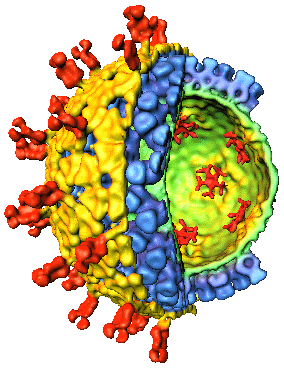
The laboratory studies how reovirus selectively infects and destroys KRAS-mutated colorectal cancer cells. Current projects explore how viral therapy can be combined with agents that regulate autophagy and immune responses to improve treatment efficacy.

PRMT5 and Epigenetic Therapeutics
Recent work investigates Protein Arginine Methyltransferase 5 (PRMT5), an epigenetic regulator implicated in tumor progression. By understanding how PRMT5 influences cancer cell survival, the lab aims to identify new therapeutic targets for aggressive colorectal cancers.

Genomics and Transcriptomics
The laboratory employs RNA sequencing, non-coding RNA analysis, and computational biology to characterize how tumors respond to therapy and identify molecular biomarkers associated with treatment response.

Protein Modeling and Molecular Dynamics Simulations
Using GROMACS molecular dynamics simulations and computational modeling we investigate how cancer-associated proteins like KRAS and PRMT5 interact and respond to targeted therapies at the molecular level. These simulations provide mechanistic insight into protein structure, drug binding, and resistance mechanisms, guiding the development of more effective cancer therapeutics.

MYC-Driven Drug Resistance
Many colorectal cancers escape RAS-targeted therapies by activating alternative growth pathways, including the MYC oncogene. We investigate whether suppressing MYC protein translation with novel inhibitors can overcome resistance and improve responses to KRAS-directed treatments.

Integrated Stress Response and PERK Signaling
Cancer cells rely on the integrated stress response to survive therapeutic pressure and other cellular stresses. Our research explores how inhibiting PERK signaling disrupts these adaptive mechanisms and sensitizes colorectal cancer cells to targeted therapies.
Featured Abstracts


